Curtain Wall Surface: Kinds, Components, Advantages & Drawbacks
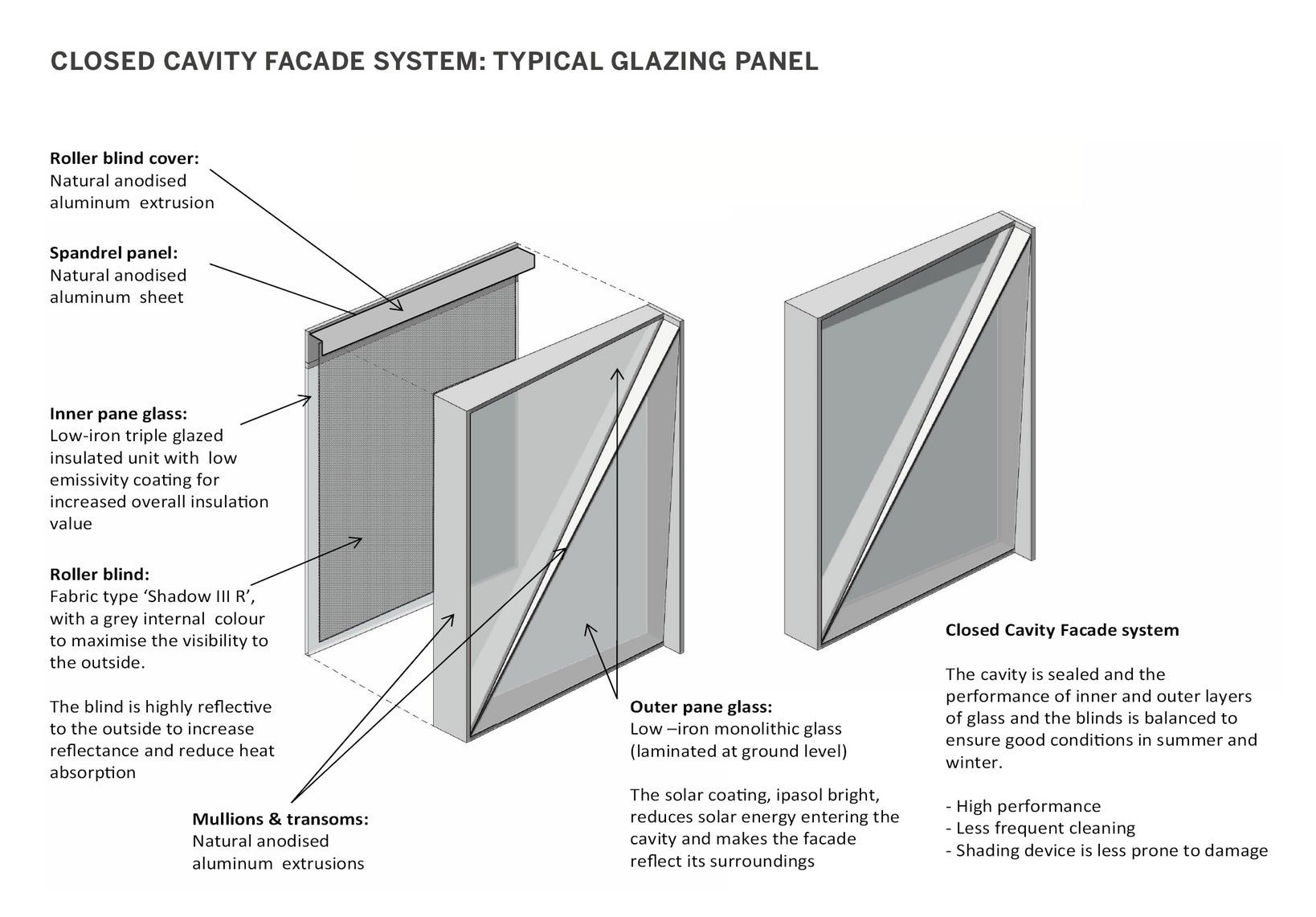
- This system generally contains upright mullions, horizontal transoms, and glass or opaque panels.Stick-built drape wall systems are the conventional technique, put together in the area with inside or outside glazing.Inside, outside, or structurally these wall surfaces can be installed with numerous polishing alternatives, and as a stick-framed wall that is split by mullions to produce smaller sized panes, they can also be mounted.
What Is A Drape Wall Surface System's Esthetic Imprint?
A curtain wall system likewise called curtain wall surfaces, polished exteriors, or glass exteriors is just one of the numerous different sorts of outside cladding systems you can utilize to develop your building. While large glass locations in curtain walls provide spectacular aesthetic appeals, they pose difficulties in temperature level control. The reduced heat resistance permits warmth transfer and solar radiation to cozy interior surfaces, developing uneasy warm build-up. Repaired louvres within the system offer minimal warm gain decrease, primarily resolving glare. Exterior louvres provide marginal enhancement by soaking up and re-radiating warmth outwards. Weatherproofing items are very important in shielding curtain wall surfaces from the aspects.
As "traditional" as it enters this relatively brand-new field, totally caught curtain walls are aluminum-based systems. This is especially beneficial for buildings found in loud urban environments. A louver is supplied in an area where mechanical tools located inside the structure calls for air flow or fresh air to run. They can likewise function as a means of allowing outdoors air to filter right into the building to benefit from beneficial climatic conditions and lessen the usage of energy-consuming cooling and heating systems. Curtain wall systems can be adjusted to accept most kinds of louver systems to maintain the very same building sightlines and style while offering wanted performance.
Structural Evaluation And Design Of Domestic Buildings Making Use Of Staadpro, Orion, And Hands-on Calculations
The drape wall surface is a primarily aluminum-framed wall including in-fills of metal panels, glass, or thin rock, and these wall surfaces do not carry the floor or roofing system lots of the structure. According to the USGBC, LEED buildings utilize 25 percent less energy on average than regular industrial structures. Live load movements arise from all occupants, materials, devices, building and construction, or other weight https://andrelgwk310.tearosediner.net/50-elegant-patio-area-cover-concepts-for-all-budget-plans aspects sustained in, on, or by structural components likely to move. Stick-built drape walls are sometimes referred to as pressure walls due to the fact that outside extruded light weight aluminum plates are screw-applied to compress glass in between the interior and exterior bedding gaskets.
Thermal tons are caused in a curtain wall surface system because light weight aluminum has a reasonably high coefficient of thermal growth. This means that over the span of a couple of floorings, https://sethqvka391.image-perth.org/obtain-influenced-by-these-4-functional-remodels-for-small-kitchen-areas the drape wall surface will certainly expand and get some distance, relative to its length and the temperature differential. This growth and contraction is represented by reducing straight mullions a little short and allowing an area between the horizontal and vertical mullions.
Curtain Wall Surface Vs Store: Details A Contractor Must Understand
Structural glazed curtain wall systems are a type of unitized system that is made to be structurally independent. They are made from big glass panels that are held in location by architectural silicone joints. Architectural glazed drape wall systems offer a smooth and nonstop sight of the outdoors atmosphere. When picking a semi-unitized drape wall system, it is very important to take into consideration elements such as layout adaptability, performance, and efficiency.
Unitized curtain wall systems consist of framing and glass elements that are constructed prior to being carried to the installment website. As it is preassembled, the unitized curtain wall surface can be larger and call for thoughtful defense approaches in the process. Nonetheless, it is an ease when mounting unitized curtain wall surfaces due to the fact that it saves time and effort for on-site component putting together. Such worries drive the contemporary customer's assistance for building designs and building materials that lower power usage.Along with standing up to wind and seismic pressures, curtain walls have to likewise endure gravity loads and temperature adjustments. In the stick curtain-wall system, the walls are typically suspended in front of architectural steel or concrete framework, and these wall surfaces are non-load bearing wall surfaces. These walling systems are functional and enable incorporating various other techniques such as gliding windows and doors.
Curtain wall building and construction is a flexible and ingenious approach to building style that provides a variety of benefits and benefits. This non-structural cladding system provides a lightweight and aesthetically striking exterior while taking full advantage of all-natural light and energy effectiveness. By understanding the components, types, and factors to consider of drape wall systems, designers, programmers, and building owners can utilize their benefits while addressing possible difficulties. Drape wall surface building is a non-structural cladding system that is used to enclose the outside of a structure. Unlike conventional load-bearing walls, drape walls are developed to sustain their very own weight and the lots imposed on them, such as wind and seismic forces.